Nozzano Castello: the medieval village between Lucca and Pisa
Located a few kilometers from Lucca, in a strategic position next to the Serchio River, Nozzano Castello preserves a history marked by borders, territorial disputes, and ancient defensive structures.
Today, the small fortified village may seem like a tranquil spot in the Lucca landscape. But its location tells a different story. For centuries, Nozzano was in one of the most sensitive areas of the territory between Lucca and Pisa, opposite the Ripafratta fortress, on the Pisan side of the river.
Walking through its streets is therefore more than just seeing a small medieval castle. It's entering a territory where geography has helped to...
to determine history.
A village built to guard the border.
The first records of Nozzano date back to the 9th century. The location explains much of its history: the castle was situated in a strategic passage between the plain of Lucca, the territory of Versilia, and the area under the influence of Pisa.
Not by chance, the fortification was destroyed and rebuilt several times throughout the centuries. Its history is directly related to the disputes between Lucca and Pisa, two cities that, during the Middle Ages and subsequent centuries, maintained relations marked by both trade and conflict.
On the other side of the Serchio River lay the fortress of Ripafratta, in Pisan territory. The two fortifications were part of a border landscape in which towers, castles, and fortresses played an essential role: observing, controlling, and protecting the territory.
Lucca Tourism itself highlights Nozzano as one of the best-preserved examples of the ancient fortifications in the border area between the two republics.
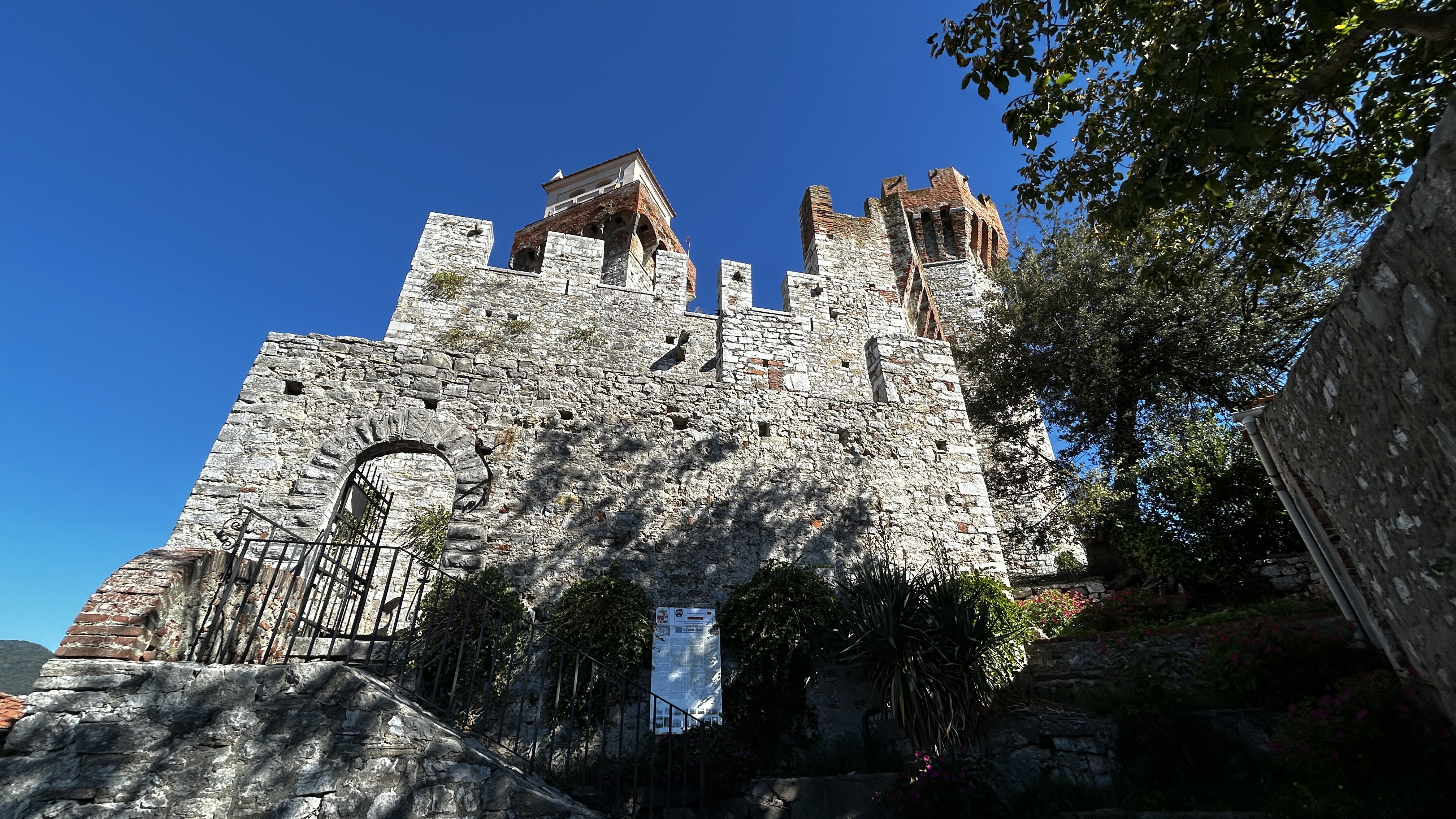
The walls of Nozzano
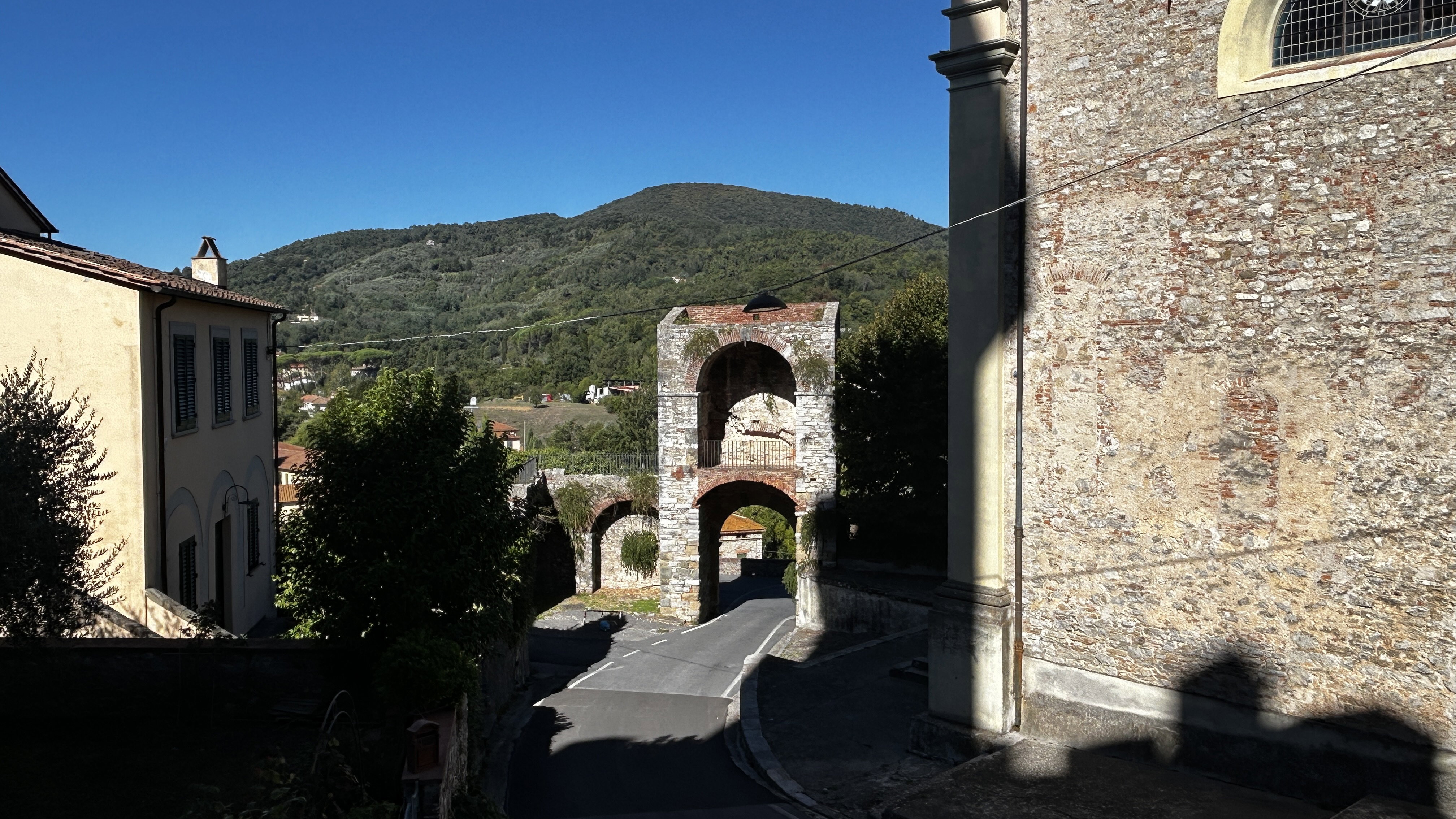
The current structure of the village allows us to understand its former defensive function.
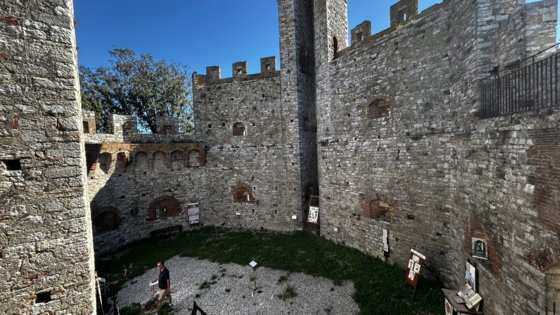
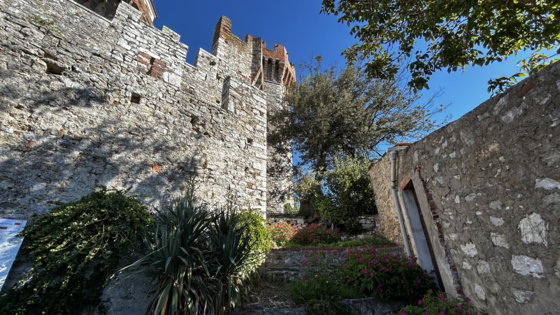
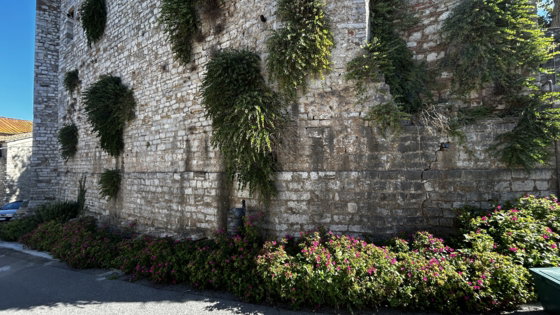
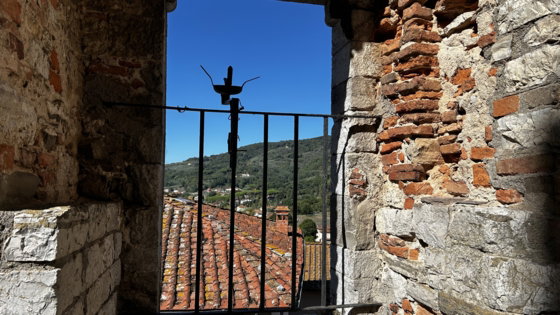
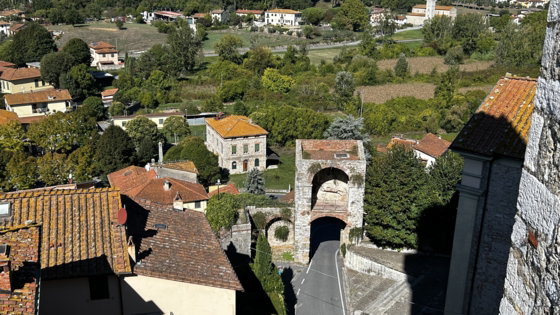
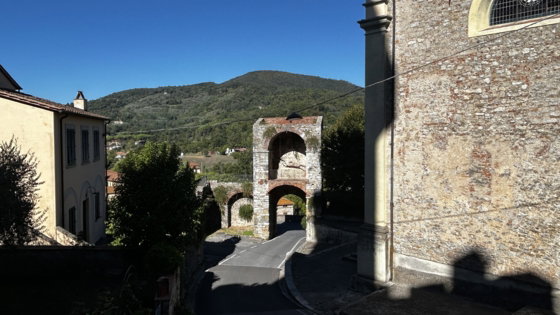
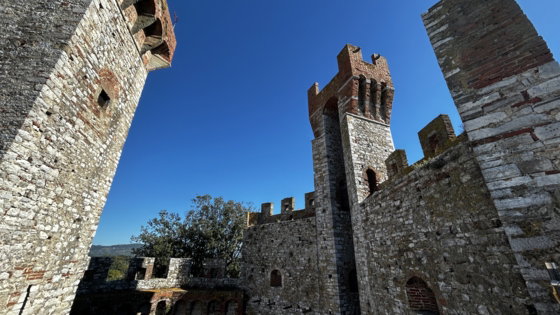
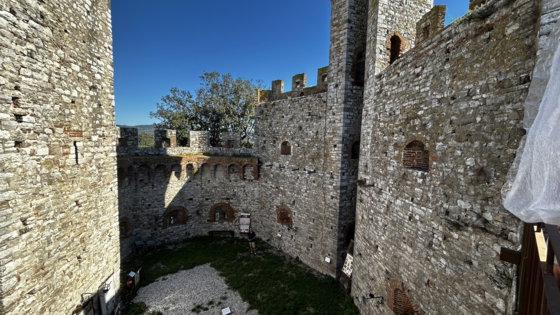
The houses are arranged within a ring of elliptical walls, accessible through a single gate. Inside is the fortified structure, a polygonal structure protected by high, crenellated walls and two towers.
This configuration is not merely an architectural feature. It reveals the logic of the place.
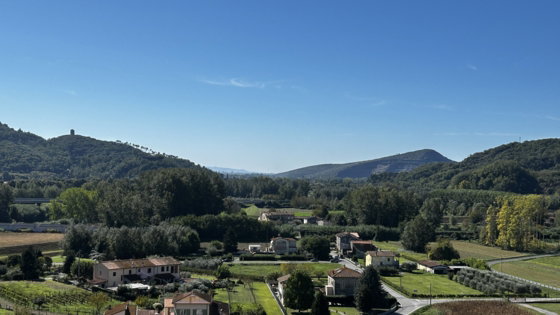
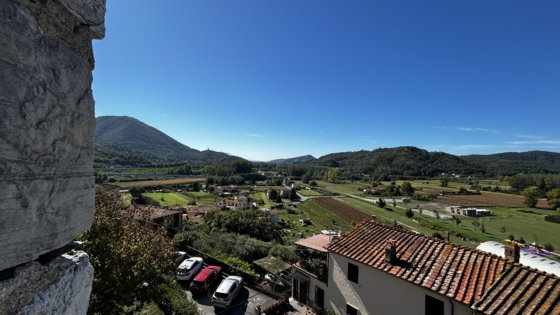
Nozzano was designed to protect those inside while simultaneously allowing observation of the surrounding territory. The very layout of the village helps visitors realize that the landscape, which today appears peaceful, was once a military landscape for centuries.
The form we know today is linked to the reconstruction carried out in 1395 by Lazzaro di Francesco Guinigi, father of Paolo Guinigi.
A castle destroyed and rebuilt many times.
The story of Nozzano is also a story of destruction and reconstruction.
According to official tourist documentation from Lucca, the original fortification was built of wood and was destroyed by the Pisans in 1314. It was later rebuilt by Castruccio Castracani, but was destroyed again after the Pisans regained control of Lucca.
The castle's strategic location made it an important target precisely because it allowed control of a crucial passage through the territory.
In 1395, a new reconstruction gave the complex the configuration that, for the most part, we can still recognize today.
The history of Nozzano, therefore, cannot be separated from the history of the border between Lucca and Pisa.
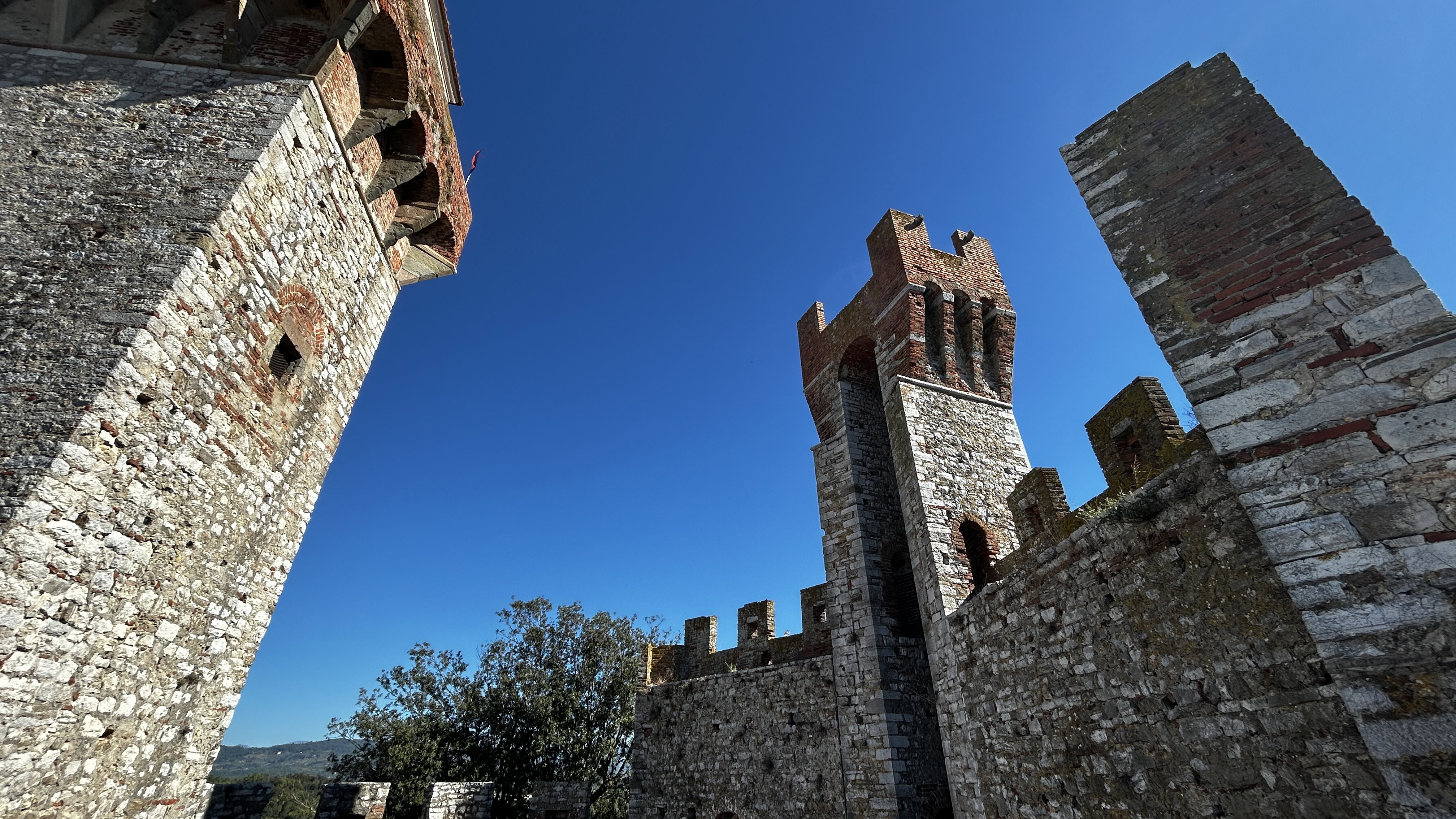
When the river also served as a means of communication.
The relationship between Nozzano and the Serchio River went beyond geographical proximity. Until the end of the 16th century, the castle also served as a control point for vessels traveling upriver towards Lucca. With the progressive abandonment of the waterways of the Lucca plain, this function lost importance, and the castle gradually ceased to play its former military role.
It's a detail that helps to look at the current landscape in a different way.
Today, the Serchio may seem like just another part of the region's natural landscape. In the past, however, the river was part of the economic, territorial, and military infrastructure that connected different areas of Tuscany.
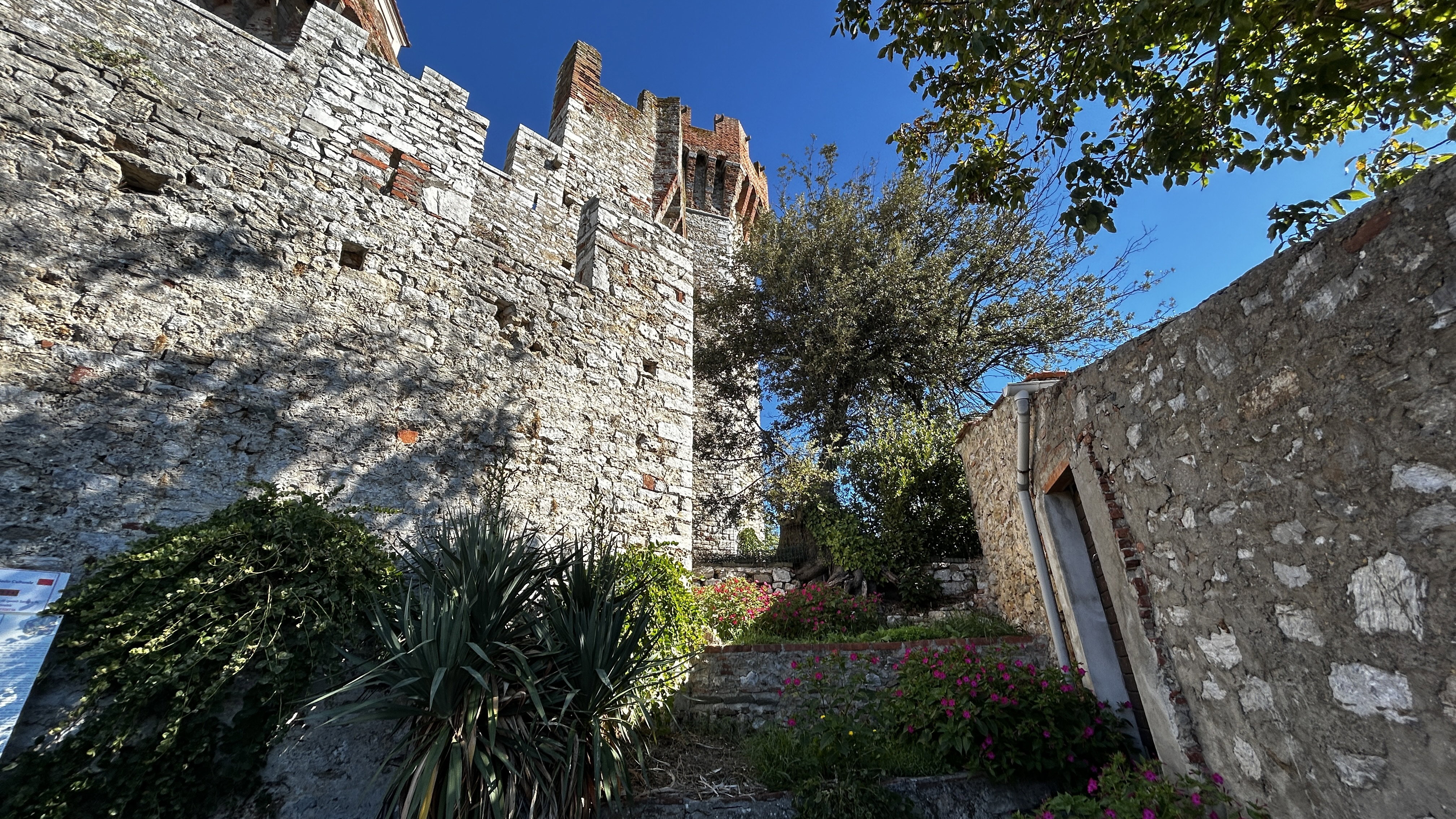
The Eye of Lucca: a network of signs across Tuscany.
One of the most curious stories related to Nozzano is his connection to the so-called Eye of Lucca, a visual communication system used by the Republic of Lucca.
The idea was simple and, for the time, extremely efficient: to use elevated points and strategically positioned towers to transmit signals over long distances.
Smoke could function as a visible warning from one point to another, allowing a message to travel through a chain of observation positions.
Nozzano was part of this defense and communication system, integrated with other towers and high points in the Lucchese territory.
The importance of this type of structure shows how the defense of Lucca did not depend solely on the city walls. There was also a territorial network of towers, fortresses, and observation points that allowed them to monitor what was happening far beyond the city limits.
It's a particularly interesting perspective for those who only know Lucca through its historic center.
The city's famous walls are just one part of a much larger defensive system spread across the territory.
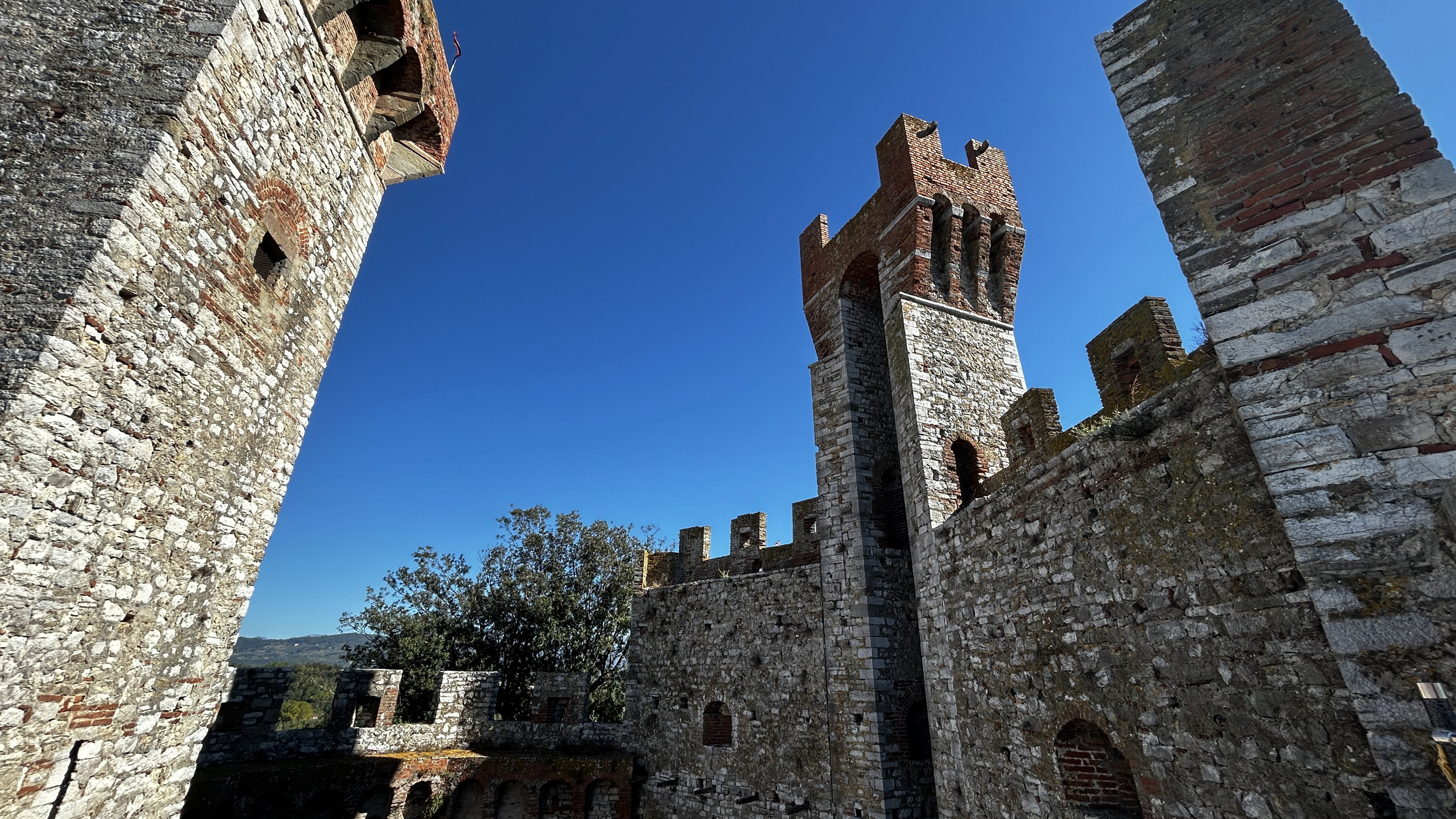
Nozzano seen from the inside
During the visit organized by the ToscanaLucca team, we had the opportunity to explore the interior of the castle accompanied by a local resident who led the tour and shared information about the history and structures of the fortification.
This type of visit completely changes the experience.
Without an explanation, it's possible to walk through the small village, observe the walls and towers, and simply find the place beautiful. When you learn the history, however, every element begins to make sense.
The position of the walls, the entrance, the towers, the relationship with the territory, and the proximity to the river cease to be isolated details and become part of the same defensive logic.
That's precisely where Nozzano Castello becomes interesting: it's not just a place to be photographed, but a place to be understood.
How to visit Nozzano Castello
The village can be explored on foot, and its relatively small size allows for a leisurely visit.
For those wishing to visit the interior of the castle, advance booking is required. Lucca Tourism informs that interior visits require prior scheduling and provides the official contact information for Castello di Nozzano.
Since schedules, visit options, and availability are subject to change, we recommend confirming the information before arranging your visit.
For those departing from Lucca, Nozzano can also be integrated into other routes through the Oltreserchio region. The area is crisscrossed by hiking and cycling paths and has other points of historical and scenic interest. Lucca Tourism itself offers routes connecting Nozzano to other fortifications of the old border between Lucca and Pisa.
Nozzano Castello and Ripafratta: two fortresses facing each other.
One of the best ways to understand Nozzano's strategic position is to look at his relationship with Ripafratta.
On one side of the territory was the fortification linked to Lucca. On the other, the Pisan fortress. Between them, the Serchio River and a region that for centuries functioned as a border zone.
This proximity transforms the visit into something more than just discovering a single castle.
It allows one to imagine a medieval landscape made up of towers, fortresses, roads, and lookout points, in which the distance between two politically rival territories could be measured in just a few kilometers.
Today, the old border no longer exists in the same way. But its marks remain present in the landscape.
The Castle Comes to Life Again
Every year, at the end of August, Nozzano symbolically returns to the Middle Ages during The Castle Comes to Life Again.
The event transforms the village into a period setting, with characters, musicians, performances, taverns, and activities inspired by medieval life.
The event traditionally takes place on the last weekend of August and is part of the cultural calendar associated with the castle. Lucca Tourism itself describes the event as an opportunity to experience the village.
"Going back in time," with musicians, artists, and references to medieval gastronomy.
Dates and schedules may vary, so it is important to check the official schedule for the corresponding edition before visiting.
Is Nozzano Castello worth visiting?
If you're in Lucca and only looking for the grand monuments, Nozzano Castello might not immediately appear on your itinerary.
But if the intention is to better understand the Lucchese territory, the answer is different.
Nozzano helps us understand that the history of Lucca does not end within the city walls. It continues along the banks of the Serchio River, through the ancient roads, the small villages, and the fortifications that protected access to the territory.
That's exactly right. This type of place reveals a less obvious side of Tuscany..
A small village, a seemingly unassuming fortification, and a geographical location that, when understood, tells centuries of history.
Nozzano Castello is one of those places where getting to know the territory also means learning to read it.
Frequently asked questions about Nozzano Castello
Where is Nozzano Castello located?
Nozzano Castle is located in the territory of Lucca, in the region of Oltreserchio, near the Serchio River and the ancient border area between Lucca and Pisa.
What is there to visit in Nozzano Castello?
The main historical complex consists of the fortified village, its walls, the access gate, the towers, and the central fortification. The interior of the castle can be visited by reservation.
Is it possible to visit the inside of the castle?
Yes. Visits to the interior require prior booking. It is recommended to confirm schedules and conditions directly with those in charge before going.
What is the connection between Nozzano and Pisa?
Nozzano was part of Lucca's defensive system in a border region with Pisa. On the other side of the Serchio River was the fortress of Ripafratta, linked to Pisan territory.
What was the Eye of Lucca?
It was a communication and observation system based on elevated points and towers that allowed the transmission of visual signals across the territory, integrating different strategic positions.
When does The Castle Come Back to Life?
The medieval festival traditionally takes place on the last weekend of August. As the program may change each year, it is advisable to check the updated information before visiting.
Is Nozzano Castello a good option for those staying in Lucca?
Yes, especially for those who want to discover a lesser-known side of Lucca and combine history, architecture, landscape, and small towns off the beaten track.

Want to go beyond the most well-known places in Lucca and discover the territories that help tell the story of Tuscany? Continue exploring ToscanaLucca and discover new places, stories, and experiences throughout the region.